Berlin squirrels show subtle genetic signs of city life fragmentation
A study of red squirrels across three Berlin locations found small genetic differences but no major impact on survival.
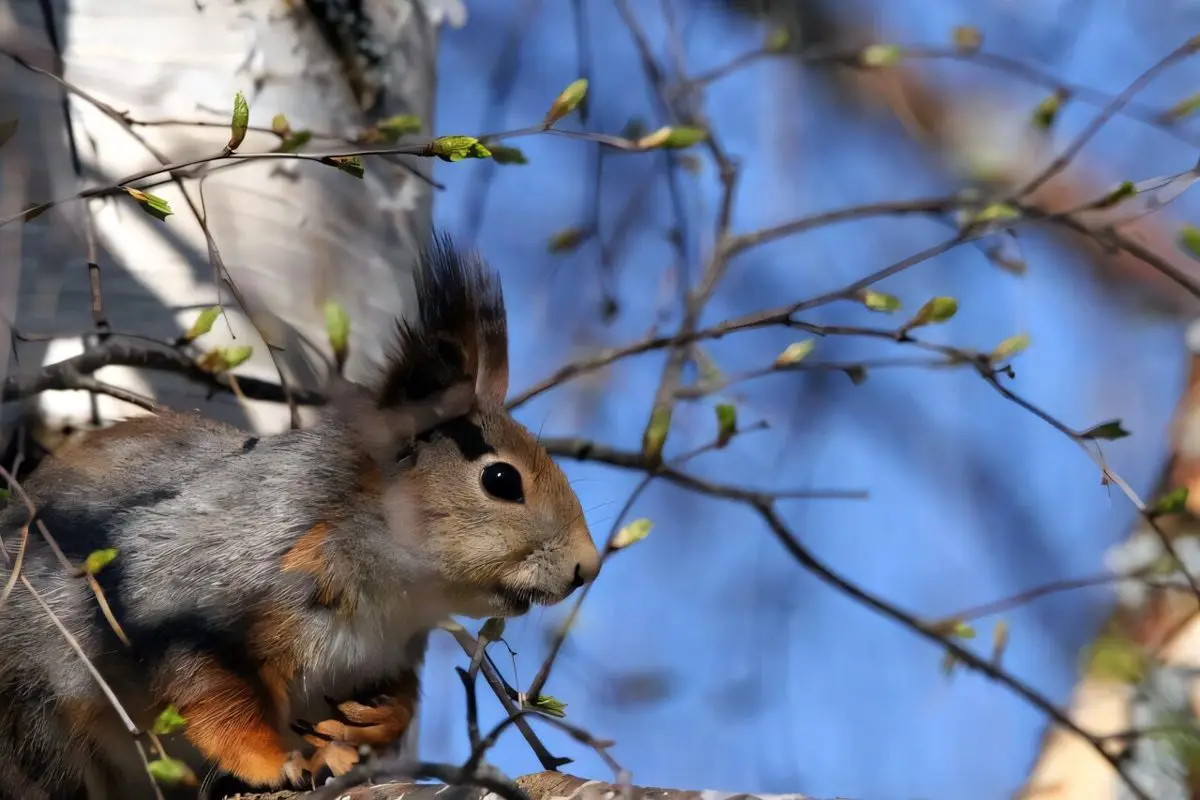
A team from the Leibniz Institute for Zoo and Wildlife Research and the Technische Universität Berlin examined whether urban infrastructure leaves genetic marks on Eurasian red squirrels. The researchers captured and individually marked 141 squirrels at three Berlin sites from fall 2021 to spring 2025: an inner-city cemetery, a large city park, and a woodland area on the outskirts. They generated 135 individual genetic profiles for analysis.
The three locations were chosen because they represent different degrees of urbanization and integration into the city landscape. A well-connected urban environment would normally produce more genetically mixed populations that differ less from one another. The genetic analysis revealed that squirrels from the woodland and cemetery mostly belonged to a single genetic group, while animals from the city park showed more distinct genetic differences.
Lead author Sinah Drenske noted that genetic diversity was high at all three sites. The pattern was not what would be expected from geography alone: the park and cemetery are only a few kilometers apart, yet the park population differed more from the cemetery and woodland populations. Drenske said the team does not see highly isolated populations but does detect subtle genetic differences suggesting squirrels cannot move completely freely through the city.
The researchers also used catch-recapture data to estimate survival probability over six-month periods. The rates were similar across all three sites. Although survival was slightly lower in the heavily urbanized city park, the statistical uncertainty was too large to confirm a clear negative effect from urbanization.
Stephanie Kramer-Schadt, co-author from the Leibniz-IZW and TUB, said the results show Berlin's squirrels have high genetic diversity with no evidence of significant inbreeding or advanced isolation. She noted that if connectivity between urban habitats continues to decline, genetic exchange could be further reduced. The study was published in the journal Ecology and Evolution.
Source: Phys.org