Five centuries of war have deepened global ties, historian argues
Research shows conflict has consistently driven global connections through troop movements, migration, and technology.
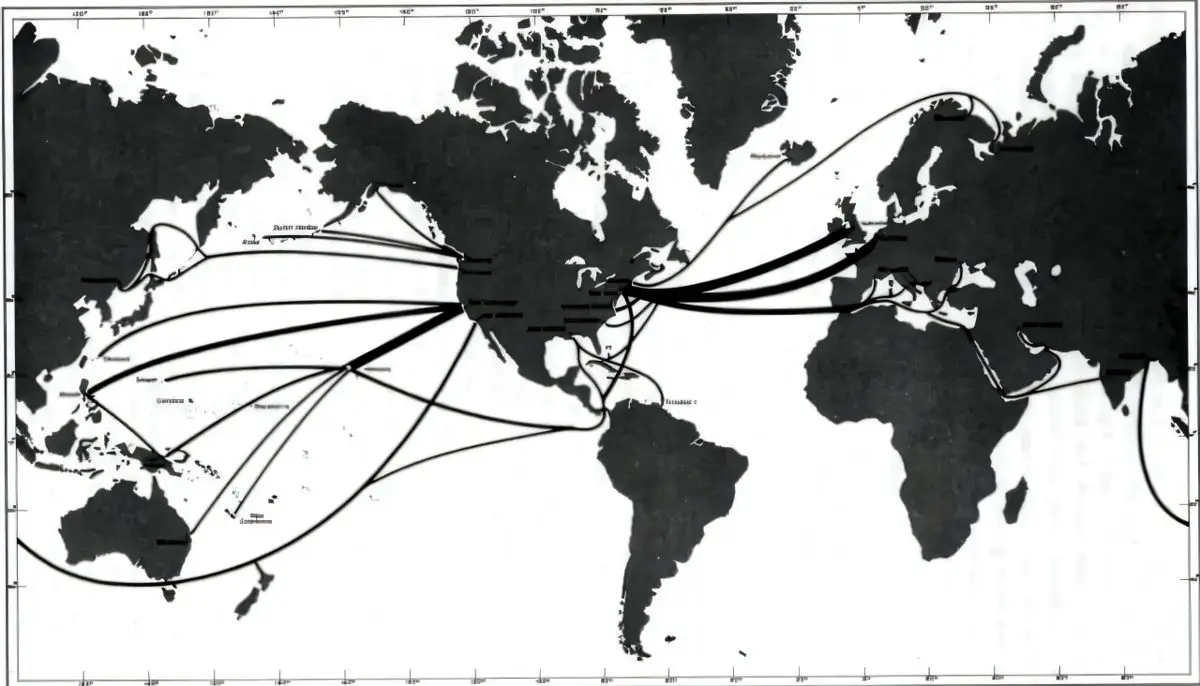
Historians often frame world wars as uniquely global events, but a recent analysis argues that warfare has been connecting distant parts of the planet for about 500 years. The research, published in the journal War & Society, examines conflicts from the 1500s to the 2000s and finds that war has repeatedly deepened and diversified globalization rather than simply disrupting it.
The analysis challenges the common assumption that war reverses globalization. While current conflicts in Ukraine and the Middle East have rattled international trade, the historical record suggests a more complex pattern. According to the research, globalization is a long-term process of increasing interconnection that extends beyond economics into politics, society, and culture, and war has transformed that process rather than halting it.
War drives globalization by putting people on the move. From the early modern period, states building colonial empires recruited skilled fighters across continents. After Japan's civil wars in the late 1500s, Japanese warriors fled abroad and were hired by Portuguese and Spanish authorities, serving as far away as the Philippines and Cambodia. European mercenaries in Asia sometimes deserted and settled locally, forming blended societies. In the 1800s and 1900s, colonial powers recruited Indigenous men from colonized lands to fight, and soldiers often formed bonds with local people that led to marriages and lifelong friendships.
Civilian displacement has also deepened global ties. In the early 1600s, the Safavid ruler forcibly relocated thousands of Armenians, who built a trading network from the Mediterranean to the Philippines. During the American Civil War, Chinese laborers fleeing the Taiping Rebellion settled in the United States, filling a labor shortage. The Holocaust scattered Jewish communities across the world, redrawing ethnic geographies, and the civil war in Somalia has created a large diaspora that moves frequently between countries.
Military technology has been a globalizing force as well. Weapons and strategic materials like saltpeter and gunpowder were traded worldwide from the early modern period, and with them traveled the technical knowledge to make and use them.
Source: Phys.org