Fossil study shows marine diversity near equator was not always the norm
Analysis of 500 million years of marine fossils reveals that the pattern of highest biodiversity in the tropics has shifted with Earth's climate.
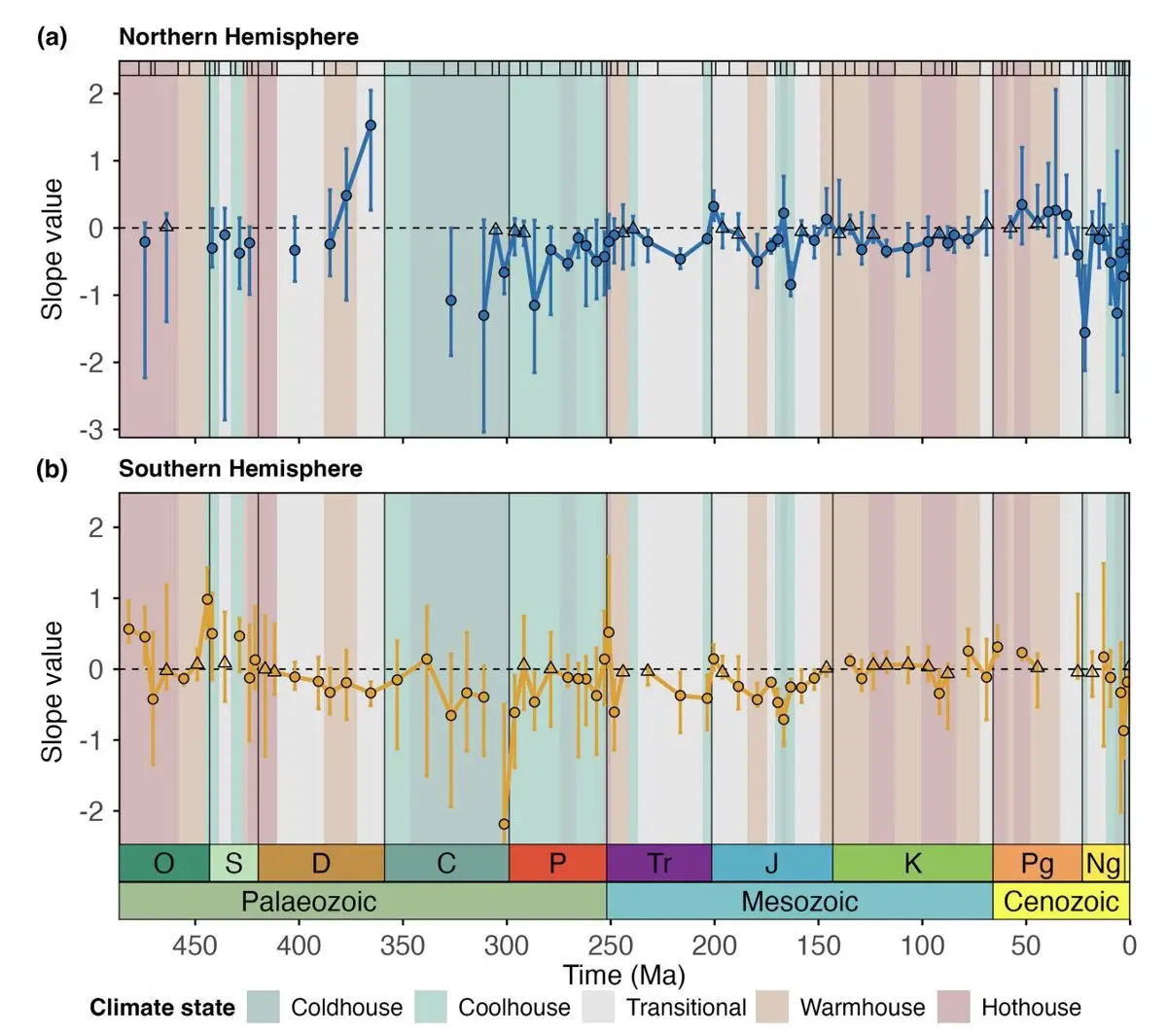
Researchers from Nanjing University and University College London have analyzed marine invertebrate fossils spanning roughly 500 million years and found that the modern pattern of highest biodiversity near the equator has not been constant over geological time. Their study, published in Proceedings of the Royal Society B: Biological Sciences, examined fossil records from the Paleobiology Database to reconstruct ancient geographic locations and compare diversity across five global climate states.
The team used a statistical method called coverage-based rarefaction to account for uneven sampling across regions. They found that during colder periods, marine invertebrates were most diverse near the equator, with diversity dropping sharply at higher latitudes. In warmer periods, however, diversity was more evenly spread across latitudes or peaked in temperate regions.
First author Die Wen noted that the strength of the latitudinal diversity gradient is closely linked to global climate. One possible explanation is that warming shifts suitable thermal habitats toward higher latitudes, which could reduce tropical biodiversity. The study does not determine how quickly these patterns might change or which regions would gain or lose species.
Co-senior author Philip Mannion said the fossil record provides a unique window into long-term effects of major environmental change. With warming expected over the next century, the results suggest possible declining tropical diversity and poleward redistribution of species that are able to disperse. The researchers plan to further investigate the roles of continental drift, habitat availability, and species' thermal preferences.
Source: Phys.org