Apple HomeView review: A smart display built around the iPhone
Apple's first smart display relies on an iPhone or iPad for many features, blending Siri AI with home hub functions.
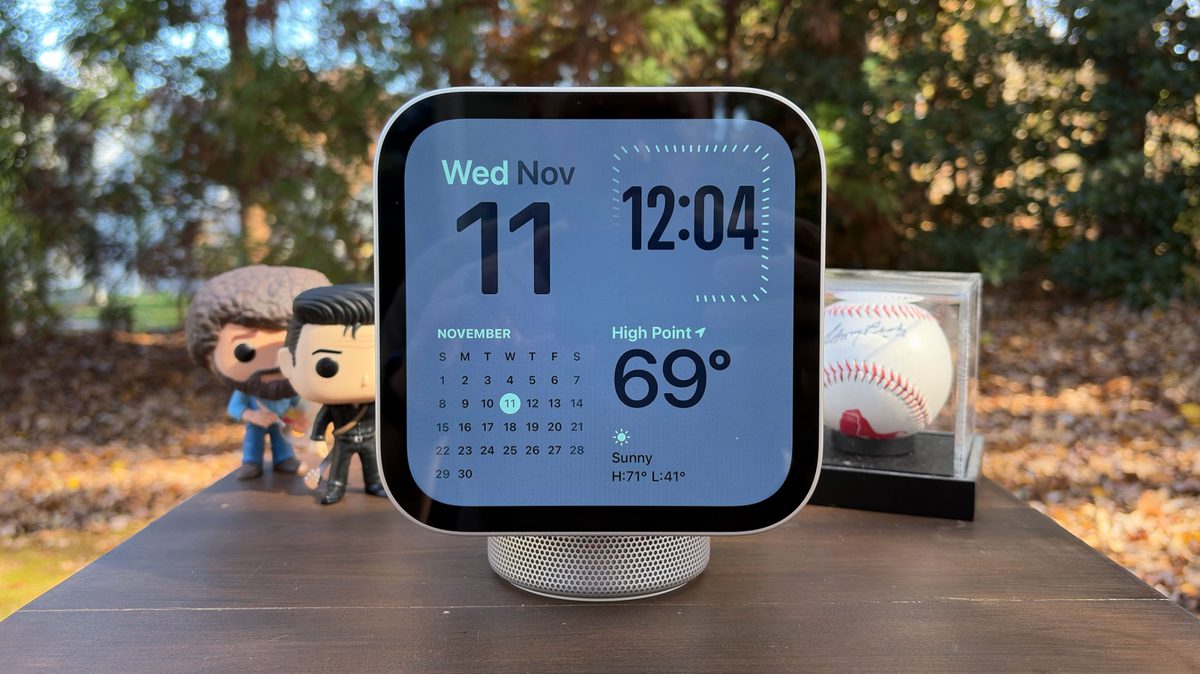
Apple's HomeView, priced at $299, is the company's debut entry into the smart display category, arriving years after competitors from Amazon and Google. Unlike those rivals, the HomeView requires an iPhone or iPad to mirror apps, similar to how CarPlay works. Its usefulness hinges on how much you use Apple's core apps like Messages, Calendar, and Photos, and on having compatible smart home devices.
The device comes in tabletop and wall-mounted versions. The tabletop model has a cylindrical base with a woofer and passive radiators for fuller sound, while the wall-mounted version is just the screen. Both have a 7-inch 1,088 x 1,088 Liquid Retina display with an oleophobic coating and an ambient light sensor that adjusts brightness from 500 nits down to 0.3 nits. There are no physical buttons; all interaction is through the touchscreen or voice.
The HomeView runs on Apple's A18 chip, which enables on-device processing of camera and microphone feeds via Secure Exclaves. Siri AI can access personal data from apps if you opt in through Apple Intelligence, and it uses facial and voice recognition to identify users. During testing, Siri handled conversational queries about lighthouses in North Carolina, checked calendar availability, and provided travel times, though it stumbled on finding hotels nearby.
A key feature is recipe integration in Safari. You can transfer a recipe link from your iPhone to the HomeView by holding the phone close to the display. A streamlined cooking mode shows ingredients with checklist functionality and step-by-step slides with timer shortcuts. However, the formatting depends on the recipe creator, so not all recipes display the ideal swipeable slides; some show a single scrollable block of text.
The HomeView also acts as a smart home hub via the Home app, supporting HomeKit and Matter devices. It offers customizable faces, including a Photos face that turns the display into a digital picture frame and a Modular face with widgets for calendar, weather, and device controls. FaceTime calls use a 12-megapixel Center Stage camera, and the device supports multiroom audio with HomePod speakers.
Source: Engadget