Earth may have generated hundreds of oceans of water during its formation
New experiments show chemical reactions between rock and hydrogen in the young Earth's atmosphere could have produced water on a massive scale.
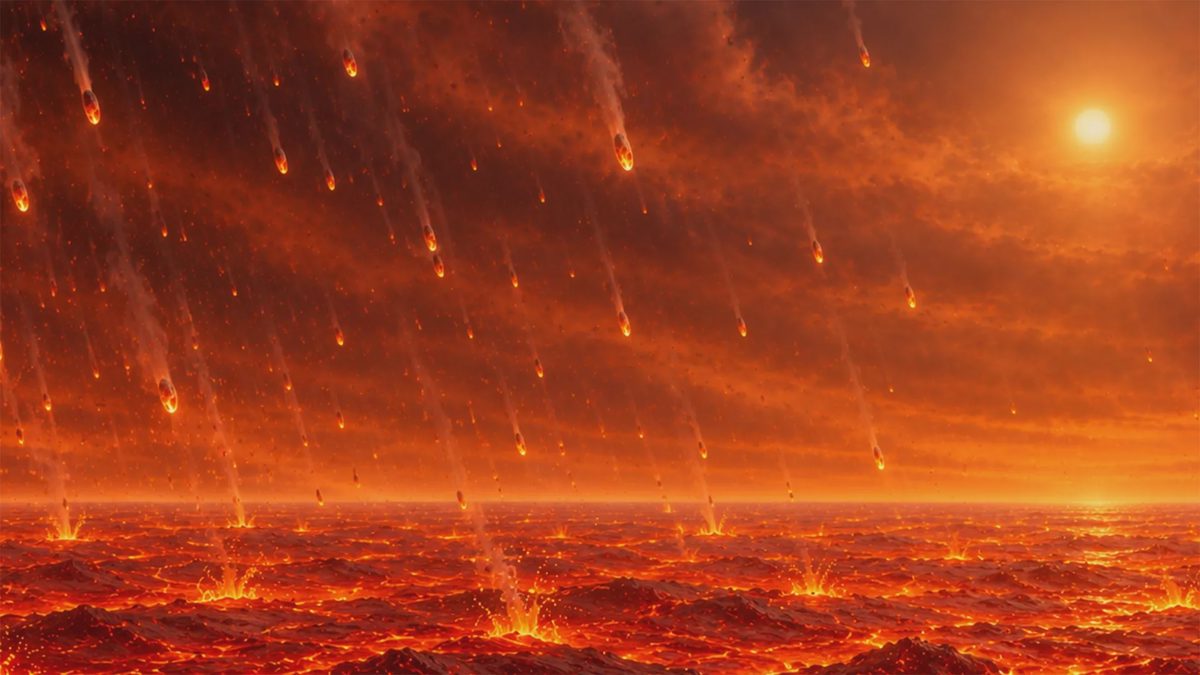
A study published in Nature Geoscience suggests that Earth may have created much of its own water during its formation, rather than relying solely on delivery from comets or meteorites. Researchers at the University of New Mexico conducted experiments that recreated the extreme conditions of the early Earth, heating silicate rocks to temperatures between 1,200 and 1,400 degrees Celsius in a hydrogen-rich environment.
The experiments, led by graduate student Susmita Garai along with professor Zachary Sharp and Peter Olson, showed that when rocky pebbles containing iron oxide interacted with hydrogen gas, nearly 80 percent of the iron oxide was converted to metallic iron, releasing water vapor in the process. The reaction occurred within minutes, far faster than the researchers had expected.
When the team scaled their experimental results to the conditions of the forming Earth, their calculations indicated that the mechanism could have produced the equivalent of hundreds of oceans' worth of water. Sharp noted that the speed and productivity of the reaction were surprising, adding that the water we see today may have been generated billions of years ago in a hell-like atmosphere.
The findings also carry implications for the search for habitable planets beyond our solar system. If other rocky planets develop similarly hot, hydrogen-rich atmospheres during their formation, they might also generate water through this process, potentially making water more common across the universe than previously assumed. Sharp pointed out that the pebble accretion model, which describes how small rocks gradually build planets, appears to solve longstanding problems and now also offers an explanation for habitability.
While the study provides strong evidence that this chemical pathway could have contributed to Earth's water supply, it does not determine how much of the planet's current water came from this mechanism versus external sources such as comets or meteorites. Additional research will be needed to establish the relative contributions of each process.
Source: ScienceDaily