Light-controlled tool halts cellular recycling to reveal disease clues
Researchers created ASAP, a light-activated tool that rapidly and reversibly blocks autophagy, uncovering unexpected targets like nuclear pore complexes and protein condensates.
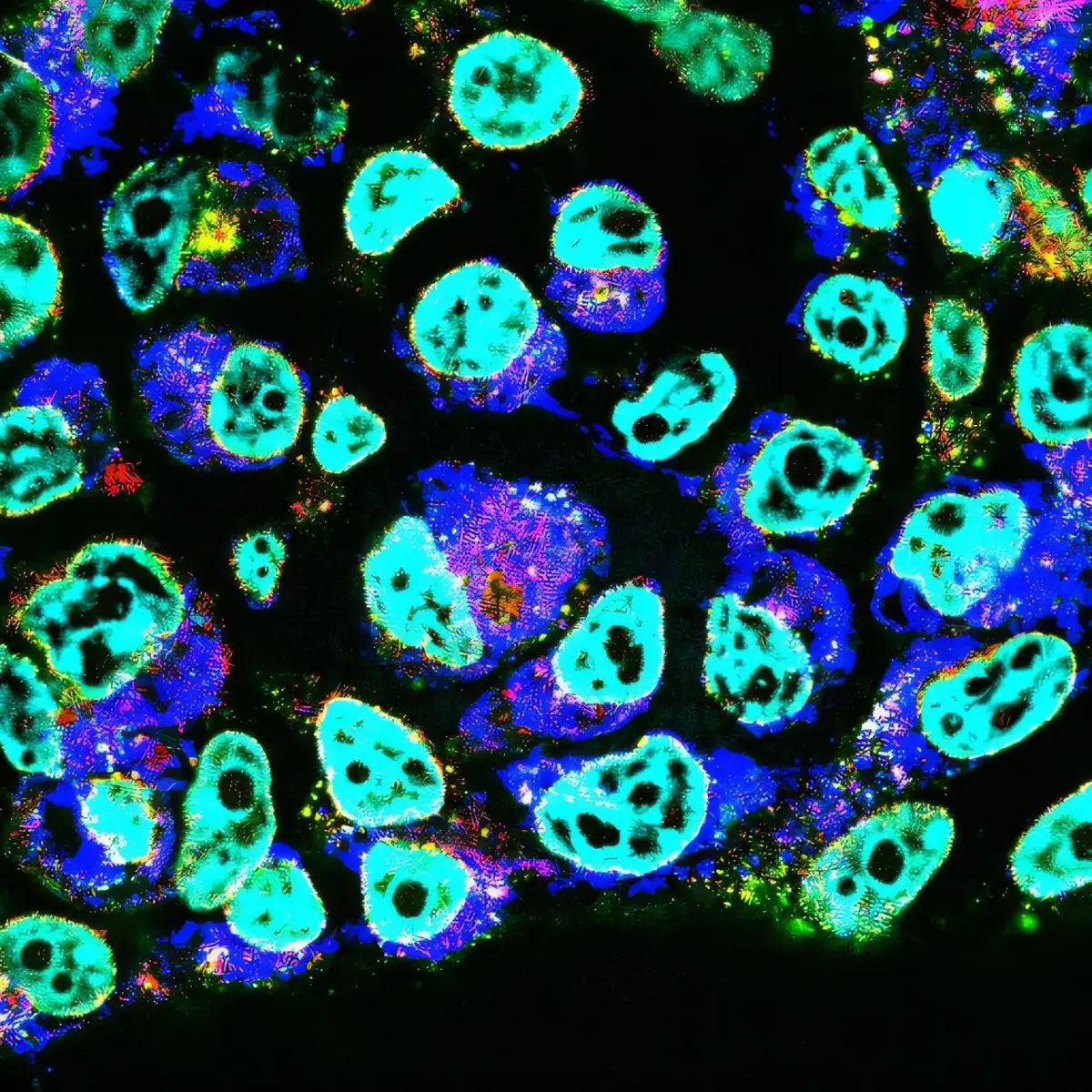
Scientists at the Salk Institute have developed a new tool called ASAP, short for Autophagic SNARE for Abrupt Photomanipulation. The tool uses light to control autophagy, the cell's natural recycling process that breaks down worn-out proteins and structures. Autophagy is linked to many diseases, but studying it in real time has been challenging until now.
ASAP works by engineering a protein that moves to block autophagy when exposed to light. This allows researchers to stop the process quickly, reversibly, and with precision. The team, led by Christina Towers, tested ASAP on human cells in petri dishes. By blocking autophagy for short periods, from five to 60 minutes, they could identify which proteins accumulated first.
The experiments confirmed known autophagy targets and also revealed new ones. Two surprises were nuclear pore complexes, which control traffic in and out of the cell nucleus, and protein condensates, which regulate protein production. The study found that autophagy targets only partially built nuclear pore complexes, leaving healthy ones alone. It also linked protein building and breakdown, a connection that had been suspected but not clearly shown before.
The researchers are now planning to use ASAP to study how cancer cells rely on autophagy. Other labs have already reached out to collaborate, especially to apply the tool in neurons. The findings were published in Nature Cell Biology.
Source: Phys.org