Quantum computer memory uses mechanical vibrations like a guitar string
ETH Zurich researchers store quantum information in microscopic vibrations, offering a compact alternative to electromagnetic memory.
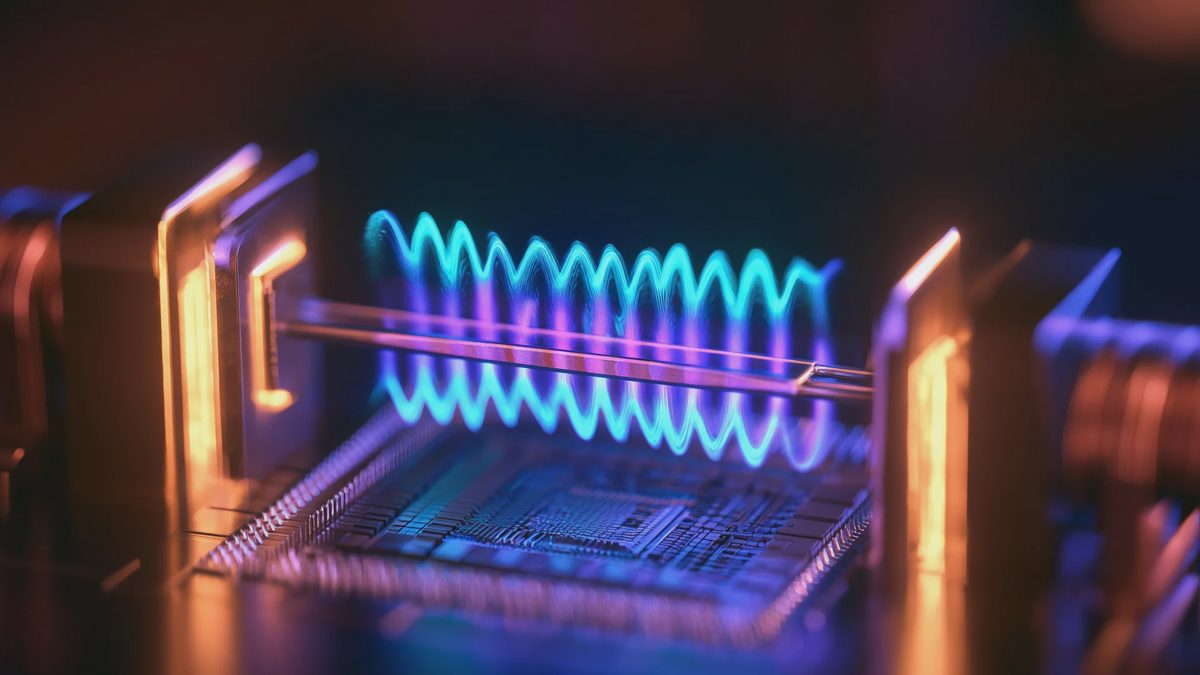
Researchers at ETH Zurich have developed a quantum computer memory that stores information through microscopic mechanical vibrations, similar to the way a guitar string produces sound. The system, described in the journal Science, uses a superconducting qubit as a processor and a separate mechanical resonator as working memory.
The design separates processing and storage, much like a conventional computer's CPU and RAM. The mechanical resonator holds information in vibration patterns, which the qubit can access, modify, and return. Unlike electromagnetic memory commonly used in quantum computers, these mechanical resonators are smaller and can support multiple vibration patterns simultaneously, potentially storing more information.
The team demonstrated the system's capabilities by successfully running two fundamental quantum algorithms: the quantum Fourier transform and period finding. These tests required the system to coordinate multiple quantum states with precision, showing it can perform genuine quantum computations rather than just store data.
Mechanical vibrations can preserve quantum states longer than electromagnetic memory before information fades, which could aid complex calculations requiring multiple processing steps. The research provides the first experimental evidence that mechanical resonators can work with superconducting qubits for quantum computation, though scaling the technology to larger systems remains a challenge.
Source: ScienceDaily