Wales urged to boost local fruit and vegetable production after summer extremes
An expert warns that Wales' heavy reliance on imported produce leaves it exposed to climate and supply chain disruptions.
Duncan Fisher, co-founder of Our Food Trust, is calling for a major expansion of horticulture in Wales after a summer of droughts and wildfires highlighted the fragility of the country's food supply. He warns that winter flooding could further strain a system that currently imports most of its fruit and vegetables.
Only 6% of the fruit and vegetables served in Welsh schools are grown in Wales, and just 0.1% of the country's agricultural land is used for horticulture. Fisher argues that this dependence on imports from vulnerable regions such as southern Europe and North Africa creates a security risk. He notes that 95% of food in the UK is bought from nine supermarkets, with a just-in-time system that stores food in lorries rather than warehouses, making it susceptible to disruptions like cyber-attacks.
Our Food Trust, launched about a decade ago by Fisher and Sue Holbrook, aims to establish 100 small farms producing for local markets. A key obstacle has been securing housing for farmers, as growers need to live on-site to respond quickly to threats like high winds or stray animals. By working with Powys council and Bannau Brycheiniog National Park Authority, the trust has built three temporary homes for farmers on 36 acres of council-owned land.
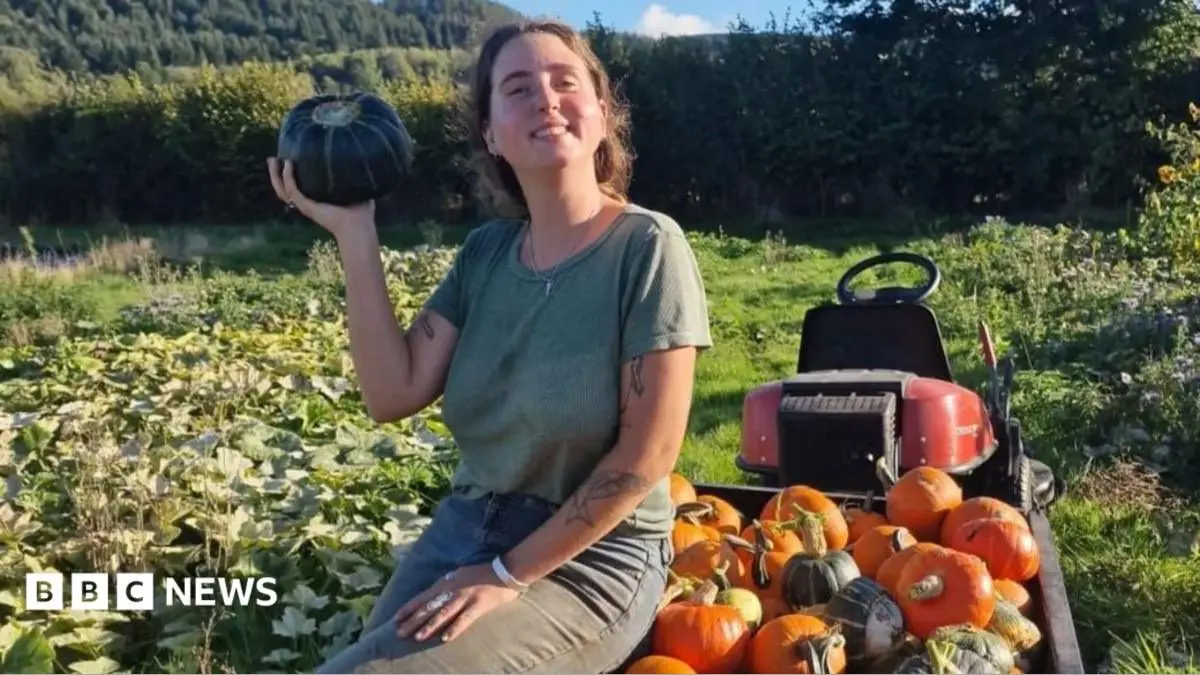
Lydia Dibben, a 28-year-old grower at Wern Farm near Newtown, says access to land and affordable housing is the biggest barrier for new farmers. Without her on-site home, she would need a second job to afford rent, leaving no time to farm. On just over an acre, she now produces 50 vegetable boxes a week, supplies four farmers' markets monthly, and sells to regional and national wholesalers. She estimates she feeds hundreds of people.
Dibben described this past summer as the hardest in her five years of growing. Heat forced her to start work at 5 a.m. and stop by 11 a.m., with polytunnels becoming unusable by 9 a.m. She would resume at 5 p.m. and work until midnight to water crops. Even with heavy watering, some plants failed to grow as expected. She believes the UK must rethink food production for a hotter climate rather than assume it can simply shift to growing grapes and peaches.
Source: BBC Science